
Lessons in Grit from the Bedouins

Living in the Middle East for sixteen years has given me countless gifts, but few as profound as the occasional encounters with Bedouins who, even in our modern world, maintain a lifestyle true to their tradition as desert people. These moments have been windows into a philosophy of life forged in one of Earth's harshest environments, and they carry lessons our comfortable, convenience-driven world desperately needs.
One particular morning stands out. I had taken my nephew, Zephyr Norriss to the desert to capture the sunrise on camera—he's an aspiring photographer and videographer, and the dunes at dawn offer light that no studio can replicate. We had barely set up our equipment when a Bedouin man approached us, polite but firm: we were standing on their falcon racing track. Rather than frustration at being turned away, I felt curiosity. I asked if we could watch and take photos of their training session instead.
His face lit up with the warmth that defines Bedouin hospitality. Not only could we watch, but they insisted we stay for breakfast afterward. We sat cross-legged on the floor of their tent, sharing strong tea and simple food, talking about everything under the sun. What struck me most was not the falcon racing or the austere beauty of their camp, but their philosophies on life. These were men whose grandfathers had survived in conditions that would kill most of us within days, and the survival techniques passed down through generations had shaped not just practical skills but an entire worldview about hardship, faith, and resilience.
The desert doesn't negotiate. It offers no participation trophies, no extensions, no second chances if you forget water. And yet, the Bedouins don't speak of the desert with bitterness—they speak of it with respect, even affection. From that conversation and others like it, I've distilled lessons about grit that have fundamentally changed how I approach difficulty.

Accept hardship as normal, not exceptional. In the desert, heat, scarcity, and danger are not anomalies to be shocked by but conditions to be expected. The Bedouins treat obstacles as part of the path, not a sign that something has gone wrong. This mindset shift is liberating: when things get hard in my work or life, I'm learning to stay calm instead of feeling singled out by fate. Difficulty is weather, not punishment.
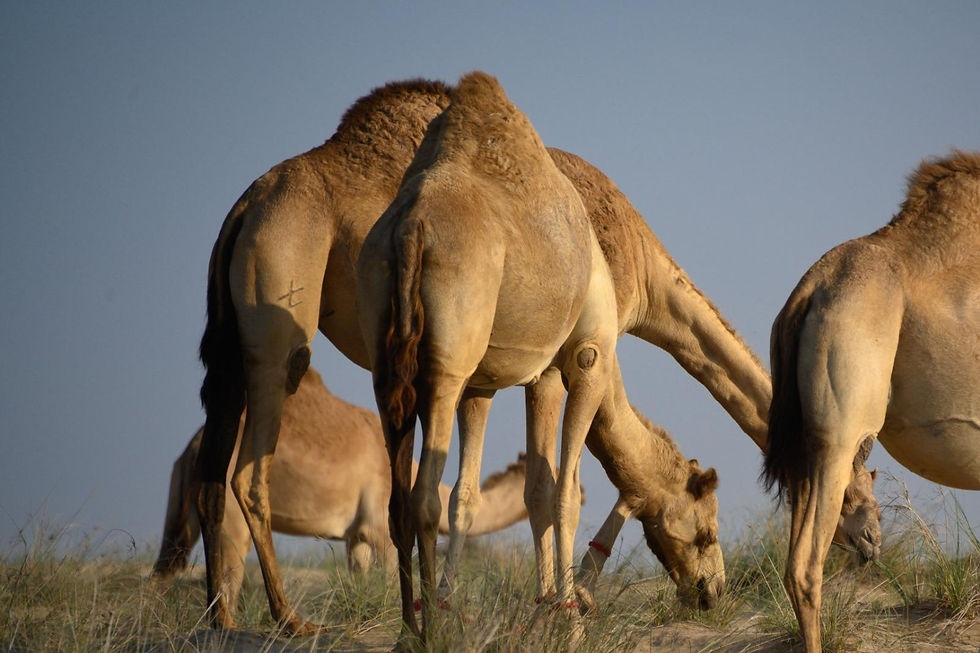
Trust in God and do your part. There's a Bedouin saying: "Tie your camel, then trust in God." It perfectly captures their balance between deep faith and fierce personal responsibility. You don't leave your camel untied and pray it stays put; you secure it, then release your anxiety about outcomes beyond your control. This philosophy reduces worry while still demanding action—a combination our anxious, control-obsessed culture needs to learn.

Adapt instead of resisting change. Desert life forces constant adjustment to weather, water sources, and shifting political realities. Bedouin culture prizes adaptability and improvisation over rigid plans. They revise their route, not their destination. In business and life, I've found this principle invaluable: when circumstances change, the question isn't "how do I force my original plan?" but "what's the smartest path from here?"
Use little, waste nothing. Scarcity trains resilience through resourcefulness. Every drop of water, every part of a camel, every tool has multiple uses in Bedouin life. That discipline builds a quiet confidence that you can survive and even thrive with limited means. In our culture of abundance and waste, practicing voluntary simplicity—using what you have more fully instead of always acquiring more—is a form of strength training for inevitable hard times.

Be patient over the long journey. Crossing the desert takes days or weeks, not hours. Bedouin culture emphasizes patience, steady pace, and endurance instead of quick wins. This long-horizon view is a powerful antidote to our epidemic of impatience. Real achievements—building a career, raising children, mastering a craft—are measured in years, not quarters.
Beyond these practical lessons, what moved me most was the Bedouins' emotional framework. They practice what I'd call "faithful acceptance"—acknowledging loss and hardship with dignity through phrases like "God gave, God has taken away." This isn't passive fatalism; it's a way to maintain peace and composure in situations you cannot control. They also live by "community before ego." In the desert, survival depends on the tribe, so loyalty, mutual aid, and hospitality aren't nice extras but existential necessities. A person's honor includes how they treat guests and share what little they have.

The modern applications are clear. Practice intentional simplicity by limiting distractions and focusing on essential goals. Build your tribe by investing deeply in relationships, treating them as infrastructure, not accessories. Reframe struggle by telling yourself "this is desert, not disaster" when things get hard. Combine maximum effort with conscious surrender of what you cannot control. Cultivate patient endurance by thinking in years, judging progress by consistency rather than speed.
That morning with my nephew, we didn't get our sunrise shots. We got something far more valuable: a masterclass in resilience from people who have been teaching it for millennia. The desert may seem like the last place to learn about thriving in our hyper-connected world, but perhaps it's exactly the first place we should look.
Paris Norriss
Keynote Speaker, Adventurer & TV Host
Photos by Zephyr Norriss


Comments